

Everything You Must Know About FDA Warning Label Requirements
Understanding the Regulatory Framework for FDA Warnings on Food and Supplement Labels
FDA warning label requirements establish standardized, mandatory risk disclosures across pharmaceuticals and consumer packaged goods to protect public health and prevent product misbranding. For prescription drugs and biologics, federal rules mandate a strict safety hierarchy divided into Boxed Warnings, Contraindications, and Warnings and Precautions. Non-prescription commodities follow specialized framework rules, such as standardized Drug Facts panels for OTC drugs, mandatory allergen declarations for foods, statutory disclaimers for dietary supplements, and specific caution statements for cosmetics.
The primary statutory backbone for these mandates is the Federal Food, Drug, and Cosmetic Act (FD&C Act), enforced primarily through the Center for Drug Evaluation and Research (CDER) and the Center for Biologics Evaluation and Research (CBER). For prescription pharmaceuticals and biologics, warning mandates are codified primarily under 21 CFR 201.56 and 21 CFR 201.57. These statutes define precisely how manufacturers must format risk information so prescribers can make informed, rapid clinical judgments. To help industry professionals navigate these dense regulations, the agency issued detailed industry guidance on Warnings and Precautions, Contraindications, and Boxed Warning Sections of Labeling for Human Prescription Drug and Biological Products — Content and Format | FDA.
Under federal law, a product is legally deemed misbranded if its labeling is false, misleading, lacks mandatory risk disclosures, or fails to display required warning statements with adequate prominence. Crucially, federal regulations (specifically 21 CFR 201.56(a)(3)) dictate that all express or implied claims in drug labeling must be grounded in substantial evidence derived from adequate, well-controlled clinical investigations. Omitting a known hazard or overstating safety margins exposes manufacturers to severe enforcement actions, including warning letters, mandatory recalls, import alerts, and federal seizures.
Distinguishing Contraindications, Boxed Warnings, and Warnings and Precautions
A frequent challenge in safety labeling is deciding where specific risk data belongs. Misclassifying risk information creates regulatory non-compliance and dilutes critical safety alerts.
- Boxed Warnings: The highest tier of safety alert. Reserved for risks so serious that they can lead to death or permanent, irreversible disability. They are also mandated when a specific serious adverse reaction can be prevented or reduced by clinical monitoring, careful patient selection, or strict avoidance of specific concomitant therapies.
- Contraindications: Situations where the risk of administering the therapeutic clearly and unequivocally outweighs any possible therapeutic benefit. These are absolute clinical prohibitions. If a drug may still be used under close monitoring or dose reduction despite a risk, it is a precaution, not a contraindication.
- Warnings and Precautions: Reserved for clinically significant adverse reactions, potential safety hazards, limitations on use imposed by risks, and steps the prescriber must take for safe administration.
Importantly, the evidentiary threshold for adding a warning does not require definitive clinical proof of causality. A manufacturer must revise labeling to include a warning as soon as there is reasonable evidence of a causal association between the product and the clinical hazard.
| Regulatory Section | Severity Threshold | Primary Evidentiary Criteria | Standard Structural Placement |
|---|---|---|---|
| Boxed Warning | Fatalities, severe irreversible toxicity, or critical risk-mitigation protocols | Substantial clinical or nonclinical (animal) data showing severe hazard | Top of Highlights (<20 lines) and preceding Section 1 of the FPI |
| Contraindications | Absolute prohibition; risk completely outweighs any clinical benefit | Documented theoretical or clinical harm with zero clinical justification | Highlights summary (or explicit “None”) and Section 4 of the FPI |
| Warnings and Precautions | Clinically significant adverse events, monitorable risks, or interaction hazards | Reasonable evidence of a causal association (definitive proof not required) | Highlights summary bullets and Section 5 of the FPI |
Core FDA Warning Label Requirements Across Product Categories
Different commodity types demand specialized visual layouts, language conventions, and technical specifications. Let’s explore how these requirements manifest across major product sectors.
Prescription Drug FDA Warning Label Requirements: Boxed Warnings, PLR, and FPI
Prescription pharmaceuticals and biologics follow the Physician Labeling Rule (PLR) format, codified in § 201.57 – Specific requirements on content and format of labeling for human prescription drug and biological products. The labeling hierarchy is structured into three main divisions:
- Highlights of Prescribing Information: A concise, half-page summary of essential prescribing data.
- Table of Contents: A complete roadmap of the Full Prescribing Information.
- Full Prescribing Information (FPI): The comprehensive, detailed scientific monograph.
When a drug requires a Boxed Warning, the Highlights section must display a condensed summary contained within a bold border. This summary has a strict 20-line length limit (excluding the uppercase header and cross-reference line). The header must read WARNING: [NAME OF RISK] in all-caps bold text, accompanied by the verbatim cross-reference statement: “See full prescribing information for complete boxed warning.”
Within the FPI, Section 5 (Warnings and Precautions) houses the detailed clinical risk profiles. Here, manufacturers must eliminate non-causal “laundry list” adverse event reporting and focus on actionable, clinically relevant events. When drug interactions require dosage modifications, specific laboratory monitoring, or therapeutic avoidance, those details must appear prominently in Section 5 and be synchronized with Section 7 (Drug Interactions) and Section 12 (Clinical Pharmacology).
OTC, Food, Supplement, and Cosmetic FDA Warning Label Requirements
Non-prescription consumer commodities carry their own distinct warning frameworks tailored to self-selection by general consumers:
- Over-the-Counter (OTC) Drugs: Governed by 21 CFR 201.66 under the standardized Drug Facts format. Warnings must appear in a predictable vertical hierarchy using specific, standardized headers:
- “Do not use” (identifies absolute contraindications, such as open wounds or known allergies)
- “Ask a doctor before use if you have” (pre-existing clinical conditions)
- “Ask a doctor or pharmacist before use if you are” (potential drug-drug or drug-food interactions)
- “Stop use and ask a doctor if” (signs of severe toxicity, worsening symptoms, or unexpected adverse reactions)
- Conventional Foods and Beverages: Mandatory warning and advisory statements focus on allergen identification under the Food Allergen Labeling and Consumer Protection Act (FALCPA) and the FASTER Act (covering milk, eggs, fish, crustacean shellfish, tree nuts, peanuts, wheat, soybeans, and sesame). Special statutory warnings also apply to specific ingredients, such as phenylketonuria warnings for products containing aspartame.
- Dietary Supplements: Must display the statutory disclaimer under DSHEA whenever a structure/function claim is made: “This statement has not been evaluated by the Food and Drug Administration. This product is not intended to diagnose, treat, cure, or prevent any disease.” Additionally, iron-containing supplements must carry mandatory pediatric accidental overdose warnings under 21 CFR 101.17(e).
- Cosmetics: Governed by 21 CFR Part 740. Under PART 740—COSMETIC PRODUCT WARNING STATEMENTS, cosmetic warning statements must be displayed in bold type on a contrasting background with a minimum character height of 1/16 inch. Key mandatory cosmetic warnings include:
- Unsubstantiated Safety: If safety is not substantiated prior to marketing: “Warning—The safety of this product has not been determined.”
- Self-Pressurized Aerosols: Must warn against puncturing, incinerating, or storing above 120 °F. Aerosols using halocarbon or hydrocarbon propellants must include deliberate inhalation abuse warnings.
- Coal Tar Hair Dyes & Sunless Tanners: Specific skin irritation patch-test instructions and non-SPF skin cancer risk statements.
Structural Rules and Layout Specifications for Drug and CPG Packaging
Structuring compliant packaging requires adhering to strict visual and spatial rules across primary containers, outer cartons, and inserts.
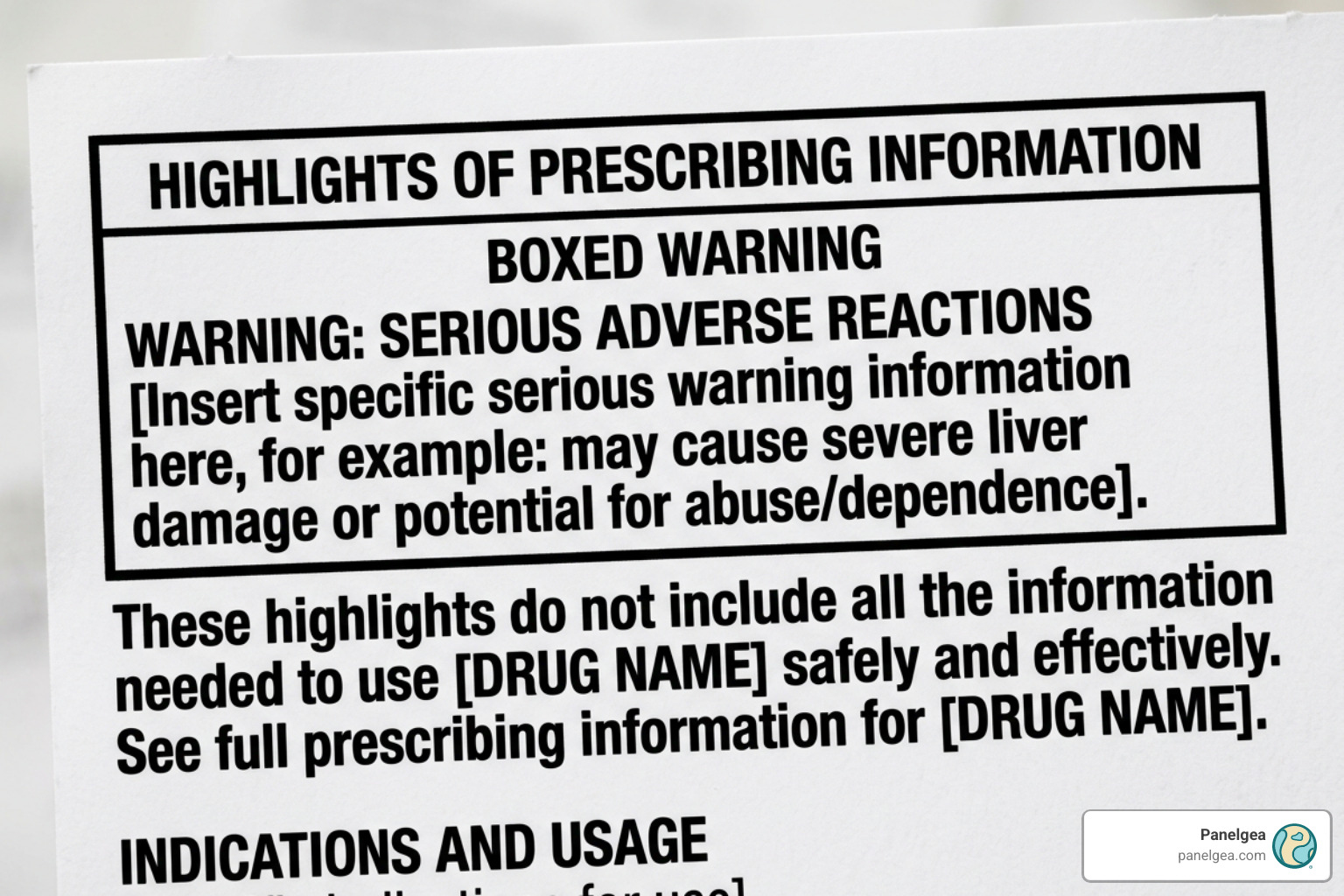
On prescription drug labeling, the Highlights section must open with the mandatory, verbatim limitation statement set in bold type:
“These highlights do not include all the information needed to use [INSERT DRUG PRODUCT NAME] safely and effectively. See full prescribing information for [INSERT DRUG PRODUCT NAME].”
To alert healthcare providers to recent safety developments, the Recent Major Changes heading tracks substantive safety modifications approved within the preceding 12 months. Only changes made to specific high-priority sections—Boxed Warning, Indications and Usage, Dosage and Administration, Contraindications, and Warnings and Precautions—qualify for listing. These entries must include the section title, subsection number, and month/year of FDA approval, remaining on the label for at least one full year.
On physical drug cartons and primary containers, clarity is critical. The FDA encourages using Tall Man lettering (e.g., predniSONE versus prednisoLONE) to mitigate look-alike, sound-alike (LASA) medication errors. Over 50% of medication use errors trace back to poor container design and visual ambiguity.
For consumer packaged goods (foods and cosmetics), mandatory warning information must be split properly between the Principal Display Panel (PDP) (the front packaging face most likely to be seen at purchase) and the Information Panel (the immediate right or rear display panel). Warning font sizes must scale dynamically based on the total surface area of the PDP to guarantee legibility under typical consumer conditions.
Eliminating Redundancy Across Prescribing Information and Packaging
A frequent flaw during label development is repeating extensive clinical text across multiple sections. Redundancy inflates document length, introduces conflicting statements when updates occur, and dilutes essential warnings.
- Use Directive Language: Replace passive or suggestive statements with clear clinical commands. Use “Discontinue [Drug] immediately if anaphylaxis occurs” instead of “Prescribers should consider discontinuing the medication if the patient exhibits signs of hypersensitivity.”
- Leverage Cross-References: State the core clinical risk and actionable management instruction in Section 5 (Warnings and Precautions), then cross-reference detailed pharmacokinetic data in Section 12 (Clinical Pharmacology) or detailed animal toxicity data in Section 13 (Nonclinical Toxicology).
- Prune Non-Causal Adverse Events: Filter out common background complaints from the Adverse Reactions section. Only retain events where data supports a reasonable causal relationship to the drug.
- Coordinate Patient Labeling: Align the professional Prescribing Information with FDA-approved patient labeling, including Medication Guides, Instructions for Use (IFU), and Patient Package Inserts (PPI), ensuring patient-facing materials mirror professional warnings without using overly dense clinical jargon.
Regulatory Shifts: PLR, PLLR, ACNU, and Front-of-Package Nutrition Updates
Safety labeling regulations continue to evolve to meet modern clinical standards. Several major regulatory transitions highlight this shift:
The Pregnancy and Lactation Labeling Rule (PLLR) retired the legacy pregnancy letter categories (A, B, C, D, and X), which were often misinterpreted as simple risk gradations. Under PLLR, prescription drug labels must use descriptive, evidence-based narrative subsections:
- 8.1 Pregnancy: Includes risk summaries, clinical considerations, and data registries detailing human and animal developmental toxicity.
- 8.2 Lactation: Details drug excretion in human milk, effects on the breastfed infant, and impacts on milk production.
- 8.3 Females and Males of Reproductive Potential: Outlines pregnancy testing, contraception requirements, and potential infertility risks.
For OTC products, the Additional Condition for Nonprescription Use (ACNU) framework allows certain therapeutics that previously required a prescription to be sold over the counter, provided the manufacturer implements an operational condition (such as an interactive digital questionnaire or automated mobile app check) to ensure safe consumer use.
Concurrently, the FDA is moving forward with its Front-of-Package (FOP) Nutrition Labeling framework. This proposed rule aims to standardize interpretive nutrition icons on the top third of the Principal Display Panel (PDP) for packaged foods and beverages, highlighting saturated fat, sodium, and added sugars.
If your team is balancing multi-category regulatory transitions or managing complex proprietary formulations, our team at Panelgea provides custom regulatory consulting to audit your packaging architecture against evolving federal requirements.
Common Compliance Pitfalls and Best Practices for Error Prevention
Labeling mistakes account for more than 22% of all import detentions and product recalls in the United States. Clinically significant drug recalls occur roughly once a month nationwide, with packaging and copy errors costing enterprise brands millions in distribution halts, inventory destructions, and regulatory penalties.

To safeguard your product catalog against costly compliance failures, follow these proven best practices:
- Conduct Rigorous Causality Filtering: Do not dilute mandatory warning sections by cataloging every minor event observed during broad clinical trials. Focus warnings on actionable, causally linked hazards.
- Standardize Typography and Contrast: Ensure every required warning statement complies with codified minimum font dimensions (such as 1/16 inch for cosmetics and OTC minimums) and maintains sharp background contrast.
- Audit Cross-Section Consistency: Verify that safety data in the Highlights matches the Full Prescribing Information, carton labeling, and patient inserts verbatim.
- Implement Automated Artwork Verification: Manual review processes are vulnerable to human error when managing complex packaging lines. Automating compliance checks helps prevent copy drops, incorrect font scaling, and missing regulatory statements before files go to print.
If you have questions regarding specific labeling rules or need clarification on compliance edge cases, review our answers to frequently asked regulatory compliance questions.
Frequently Asked Questions About FDA Warning Labels
What is the maximum line limit for a Boxed Warning in the Highlights section?
Under 21 CFR 201.57, a Boxed Warning summarized within the Highlights of Prescribing Information must not exceed 20 lines of text. This limit does not include the uppercase warning heading or the mandatory verbatim cross-reference statement (“See full prescribing information for complete boxed warning”). The summary must use concise, directive language and be enclosed within a bold border.
How soon must a manufacturer update a warning label when a new adverse hazard is identified?
A manufacturer must update its labeling to include a warning as soon as there is reasonable evidence of a causal association between the drug and a serious hazard; absolute clinical proof of causation is not required. Under Section 505(o)(4) of the FD&C Act, the FDA can mandate safety labeling changes based on postmarketing surveillance data. Manufacturers can also rapidly implement safety-strengthening updates prior to formal FDA approval by submitting a Changes Being Effected (CBE-0) labeling supplement.
What warning statements are mandatory on cosmetic and aerosol products under 21 CFR Part 740?
Under 21 CFR Part 740, cosmetics must carry a conspicuous principal display panel warning (“Warning—The safety of this product has not been determined”) if ingredient and product safety have not been adequately substantiated. Cosmetics in self-pressurized containers must display warnings against puncturing, incinerating, or storing above 120 °F. Aerosols containing halocarbon or hydrocarbon propellants must include a warning alerting consumers that intentional misuse by deliberately concentrating and inhaling contents can be harmful or fatal. All cosmetic warning text must be in bold type on a contrasting background with a minimum font height of 1/16 inch.
Mastering Packaging Compliance
Ensuring full compliance with FDA warning regulations requires strict adherence to statutory language, precise graphic layout standards, and clear risk communication. Whether you are managing prescription pharmaceuticals governed by PLR formatting or engineering commercial consumer goods, overlooking a mandatory warning can halt distribution and trigger severe regulatory penalties.
At Panelgea, we help consumer packaged goods brands eliminate labeling risks entirely. Our automated FDA-compliant nutrition and supplement facts panel platform handles complex ingredient formulations, verifies required allergen disclosures, and generates print-ready, fully compliant vector artwork—giving you complete confidence in your packaging compliance.