

5 Ways Nutrition Analyzers Help Eliminate Labeling Risks
A modern nutrition facts panel generator with ingredients helps to automate recipe building and recipe analysis by parsing individual ingredients, converting volume measurements into standardized metric gram weights, matching items against verified food composition databases, and dynamically calculating per-serving nutrient totals and % Daily Values. These eliminates the tedious manual math of consulting nutritional composition tables, calculating fractional weights, and summing dozens of nutrient columns by hand, while presenting additional information that could be utilized in production scale-up and labeling.
1. Instant Nomenclature Standardization and Multi-Modal Ingredient Entry
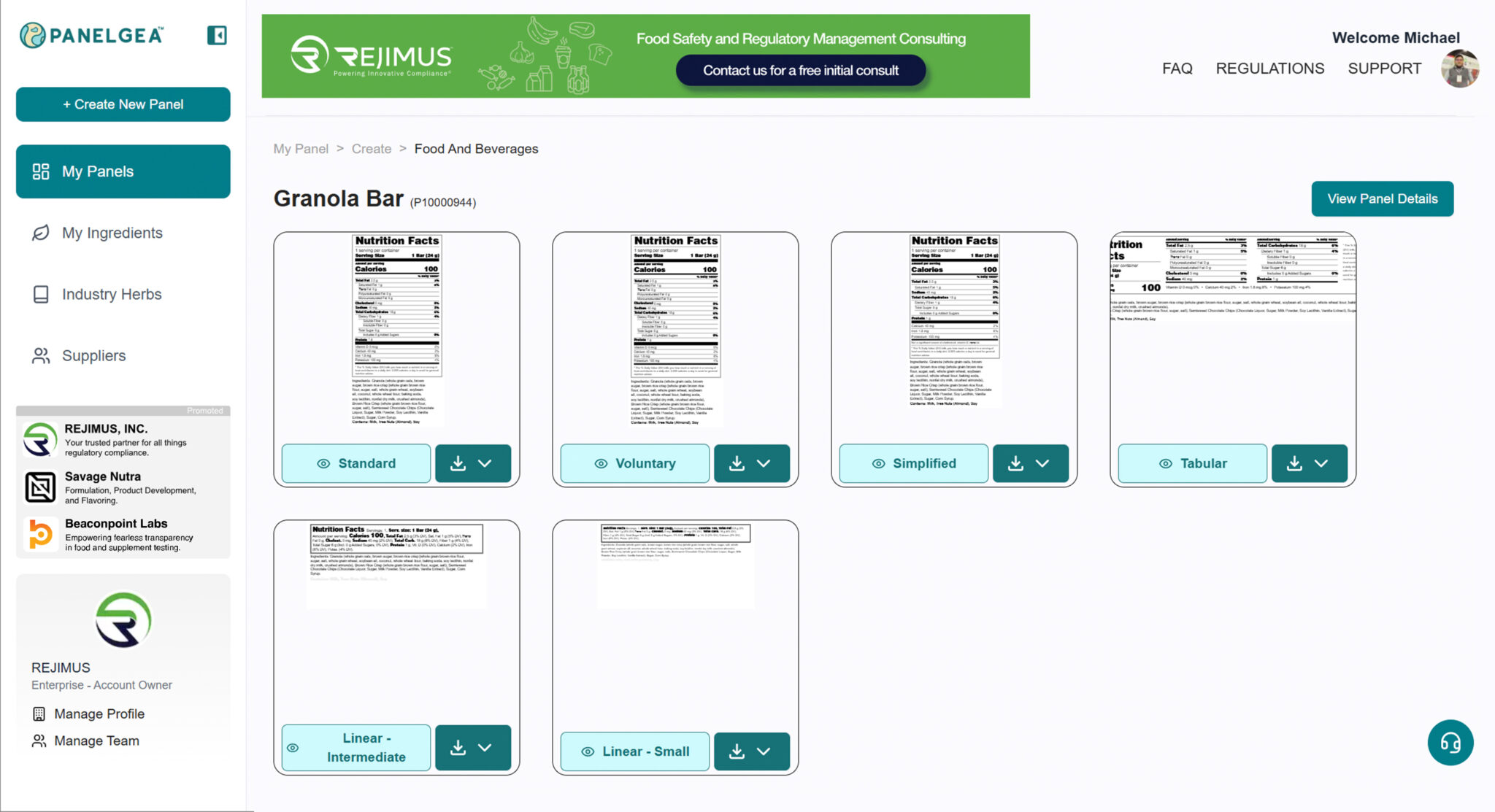
Instead of requiring manual formatting or calculations for every single component of a respective facts panel, the system automatically parses quantities, unit measurements, modifiers, and food descriptions. The output should be the generation of all available compliant facts panels for the desired packaging, ranging from hi-resolution graphics to vector image files that are editable and print-ready.
Multi-Modal Ingredient Inputs via Text, Spreadsheets and Direct database connection
Modern tools accept ingredient inputs beyond typed text:
- Raw Text Input: Accepts unstructured text directly from recipe cards, compiling amounts and ingredients line-by-line.
- Data Uploads: Formulas derived from individual ingredient records structured recipe schema or directly uploaded.
- API Direct Connections: Ingredient and formulation records ported directly into a platform for ease of use and reference, along with integration of governing features to manage nutritional output and facts panels.
- AI Review/Reading: Optical character recognition (OCR) and computer vision or text evaluation to identify printed recipe text or detect single-dish culinary components and propose values; requires compliance oversight to verify values and presentation for labeling purposes.
Automated Gram Weight and Volume Conversions
A common source of calculation error involves volume-to-weight conversions. A cup of sifted all-purpose flour weighs roughly 120 grams, while a cup of packed brown sugar weighs closer to 220 grams.
Advanced nutritional calculators use ingredient-specific density factors to normalize household units (teaspoons, tablespoons, fluid ounces, cups) into metric gram weights in order to properly calculate nutrient values. These can provide the critical elements needed for manufacturing scale-up, from kitchen or pilot all the way up to commercial.
2. Direct USDA Database Integration vs. Branded Food Matching
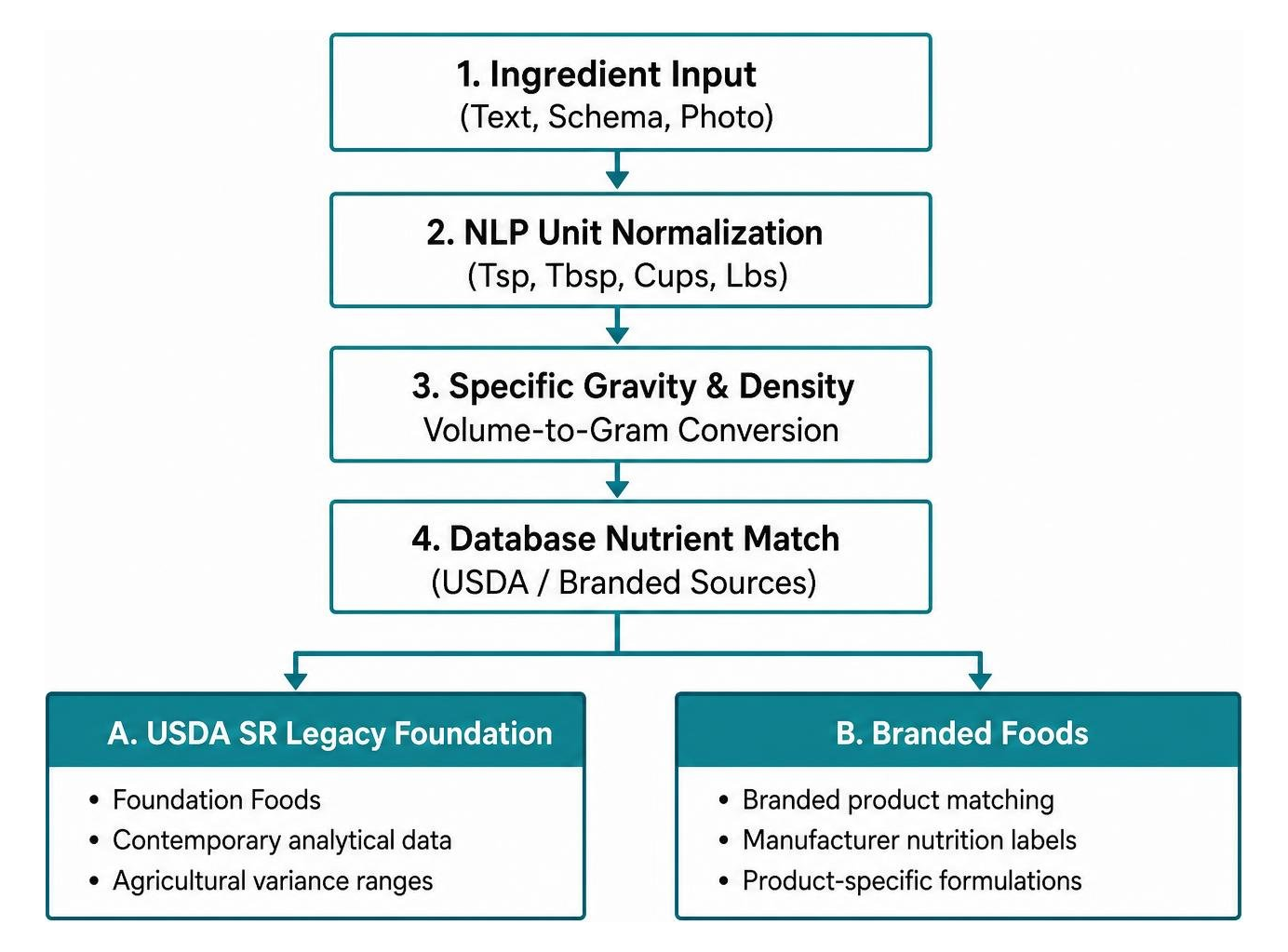
Automated calculators source nutrient data by matching normalized ingredients against established food composition databases.
USDA FoodData Central Integration
Online tools often rely heavily on the USDA FoodData Central system rather than actual nutritional analysis. The two primary sources are specifically:
- Foundation Foods: Contemporary analytical data providing detailed nutrient breakdowns and agricultural variance ranges.
- SR Legacy (Standard Reference): Historical reference data covering thousands of generic whole foods, raw produce, meats, and basic commodities.
These datasets provide unrounded nutrient profiles across 28+ vitamins, minerals, lipids, amino acids, and energy metrics. PDCAAS adjustments are also a critical factor to account for.
Handling Discrepancies Between Generic and Branded Product Data
When using a nutritional calculator, it helps to understand the difference between generic commodity entries and branded items:
- Generic Entries: Provide complete micro- and macronutrient profiles, including potassium, vitamin D, choline, and fatty acid breakdowns.
- Branded Products: Come from consumer packaging entries, which often list only the nutrients required by FDA labeling regulations.
- Customized Ingredient Records: If a food ingredient or dietary ingredient is created, manual nutrient inputs can be captured for future use and integration into formulas or recipes.
3. Dynamic Serving Size Scaling and Recipe Building
Calculating multi-serving or for different populations, yields manually requires constant recalculation whenever serving counts or ingredient amounts change. Automated tools adjust these totals dynamically.
Comparing ingredient nutrient profiles can help formulators dial in to reduce calories, lower saturated fats, or boost protein without manually recalculating the entire formula.
4. How to Use a Nutrition Facts Generator with Ingredients
Creating an accurate recipe nutrition panel requires careful data entry and verification. Imported ingredients can include pre-populated nutritional values, but it is critical to understand how those came to be and how such applies to generate theoretical nutritional calculations versus actual nutritional analysis.

Setting Up Your Recipe in a Nutrition Facts Generator with Ingredients
- Input Manually or Import: Enter each ingredient on a separate line with a numeric quantity, a standard unit of measure, and the exact item description.
- Determine Yield Changes: Specify whether the ingredient is raw, boiled, roasted, drained, or chopped (e.g., “200g raw skinless chicken breast” vs. “200g roasted chicken breast”).
- Set the Yield account for Overages: Enter the final number of servings or the total finished batch weight.
- Override(s): Enter customized values to account for regulatory allowance of preferences in value declarations and/or content claims.
Adjusting for Yield, Moisture Loss, and Cooking Methods
Cooking alters the physical and nutritional characteristics of food:
- Moisture Gain or Evaporation: Baking, boiling, and roasting reduce water content, concentrating calories, sugars, and minerals per gram of finished weight.
- Fat Absorption & Rendering: Pan-frying absorbs cooking oil into the food matrix, while roasting meats renders out fat.
- Other Yield Factor Adjustments: Set your total serving weights based on the finished, cooked batch weight rather than raw ingredient weight alone.
5. Automated Nutrient Value Calculations
Manual calculation of Percent Daily Values (% DV) requires looking up reference values across multiple nutrients and calculating individual percentages against daily targets.
Daily Reference Values and Micronutrient Profiling
The FDA bases Daily Values on a standard 2,000-calorie reference diet for adults and children aged 4 years and older:
- Total Fat: 78g
- Saturated Fat: 20g
- Cholesterol: 300mg
- Sodium: 2,300mg
- Total Carbohydrates: 275g
- Dietary Fiber: 28g
- Added Sugars: 50g
- Protein: 50g
- Vitamin D: 20mcg
- Calcium: 1,300mg
- Iron: 18mg
- Potassium: 4,700mg
Calculators determine the % DV for each nutrient by dividing its per-serving amount by these reference standards.
Accuracy Benchmarks and When to Upgrade to Commercial Labeling
Online recipe or nutrition generators can provide fast estimates for home cooking, meal planning, and food blogs. However, research kitchens and commercial food manufacturing requires a clear understanding of data limitations, testing implications as well as intended labeling or packaging considerations when it comes to commercial scale production.
Theoretical Database Estimations vs Laboratory Nutritional Analysis
For recipes made from standard, generic whole ingredients, database calculations generally fall within 10–20% of laboratory analytical testing.
Variance between calculated and lab-analyzed values typically stems from:
- Natural agricultural variations in soil quality, weather, and animal feed.
- Differences in cooking times, temperatures, and moisture retention at a respective scale.
- Inconsistent volumetric home measuring versus precision commercial batch weighing.
- Processing or manufacturing function impacts that impact the final actual nutritional values determined for consumers.
- Stability or Shelf-life considerations on certain nutrient values changing over time.
Recipe Analyzers vs Commercial Compliance Platforms
Free online recipe calculators can work well for consumer use at a basic use level, but commercial packaging for retail sale requires compliance with strict FDA regulations under the Nutrition Labeling and Education Act (NLEA), which if not integrated into the platform to ensure compliance checks and controls, requires external expert and legal reviews at a costly addition.
When taking a food, beverage, or dietary supplement to market, professional platforms ensure formulations meet regulatory rounding rules, panel format requirements, and allergen disclosure mandates at minimum.
Frequently Asked Questions About Recipe Nutrition Analysis
How accurate is an online nutrition facts generator compared to lab testing?
For formulas, recipes and menus made with standard, generic ingredients and clear measurements, database calculations usually land within 10–20% of chemical laboratory analysis, but such may not be deemed acceptable for use with respect of actual label claims, including for Class 1 Nutrients. This may present a notable issue when reliant on only theoretical calculations which most current day applications are reliant upon. However, nutritional analysis by a lab is the gold standard for all foods, especially highly processed foods, fried items, or products with complex fat or moisture loss during commercial manufacturing, and nutrient degradation. The allowance to use both is a superior function giving formulators and brands the ultimate flexibility to ensure labeling and content claim compliance.
Conclusion
Automated recipe nutrition analyzers and facts panel generators eliminate the tedious manual math of converting units, aggregating nutrients, and dividing batch yields and common formatting presentation errors. While they allow research kitchen and cooks, meal planners, and food creators to calculate recipe macros quickly, or progress faster into proof of concept formulas and pilot production, including comparing alternative ingredients or combinations, the critical step of final product testing to ensure label claims are met helps to stave off both legal and regulatory actions from taking place.
For consumer-packaged goods (CPG) brands, food manufacturers, and dietary supplement companies, formulation compliance requires more than rough estimates. Furthermore, disputes over values generated or presented, which have been collectively derived from only theoretical values of incorporated ingredients, presents little to no confidence for such users or end consumers. When scaling from kitchen recipes to retail shelves, our team at Panelgea provides expertise with automated, regulatory-grade Nutrition Facts and Supplement Facts panels – complete with real-time database validation, allergen checks, and print-ready vector artwork to get into print and production faster.